Tone Mapping and HDR

HDR and Tone Mapping
Since version 0.39, BeamNG uses a Gran Turismo 7 tone mapping, replacing the previous ACES tone mapper. This updated system is designed to better preserve physically based lighting values while providing more consistent and higher quality results across both SDR and HDR displays.
HDR rendering vs HDR output
It is important to distinguish between HDR rendering and HDR output, as they serve different roles in the pipeline.
HDR rendering refers to how the engine processes lighting internally:
- The scene is calculated using a very wide range of brightness values
- Light intensities use real world units (lux, nits, etc.)
- No clamping is applied during lighting calculations
This is always active as part of physically based rendering.
HDR output refers to what the display can show:
- SDR displays are limited (typically ~100 – 300 nits)
- HDR displays can reach much higher brightness (1000 – 10 000 nits or more)
The current output pipeline supports SDR, scRGB HDR, and HDR10 output. HDR output uses display settings such as paper white and peak white to encode the final image for the active display mode.
Role of tone mapping
Tone mapping bridges the gap between HDR rendering and the final image on screen.
- On SDR displays, it compresses the wide dynamic range into a limited range while preserving contrast and detail
- On HDR displays, it still shapes the image, but allows much brighter highlights and improved contrast and color accuracy
Even in HDR mode, tone mapping is required, it defines how brightness rolls off and how colors behave at high intensity.
Why Gran Turismo 7 tone mapping
Traditional tone mapping operators often introduce issues such as:
- Clipped or washed-out highlights
- Loss of contrast in bright scenes
- Color shifting under high intensity
- Color difference between HDR and SDR output
The GT7 tone mapper avoids these problems by:
- Working in perceptual color spaces (ICtCp or Jzazbz)
- Separating luminance from chroma to preserve color fidelity
- Applying a smooth highlight “shoulder” for natural brightness rolloff
- Blending per channel and perceptual results for stability
This results in more natural highlights, better color retention, and improved visual consistency.
SDR and HDR parity
A key advantage of this system is consistent appearance between SDR and HDR:
- SDR output is mapped to a defined “paper white” level (typically ~250 nits)
- HDR output scales to the display’s peak luminance
- The tone mapper adapts internally to maintain a similar overall look
This means content does not need to be authored separately for SDR and HDR. Physically correct lighting will translate properly across both.
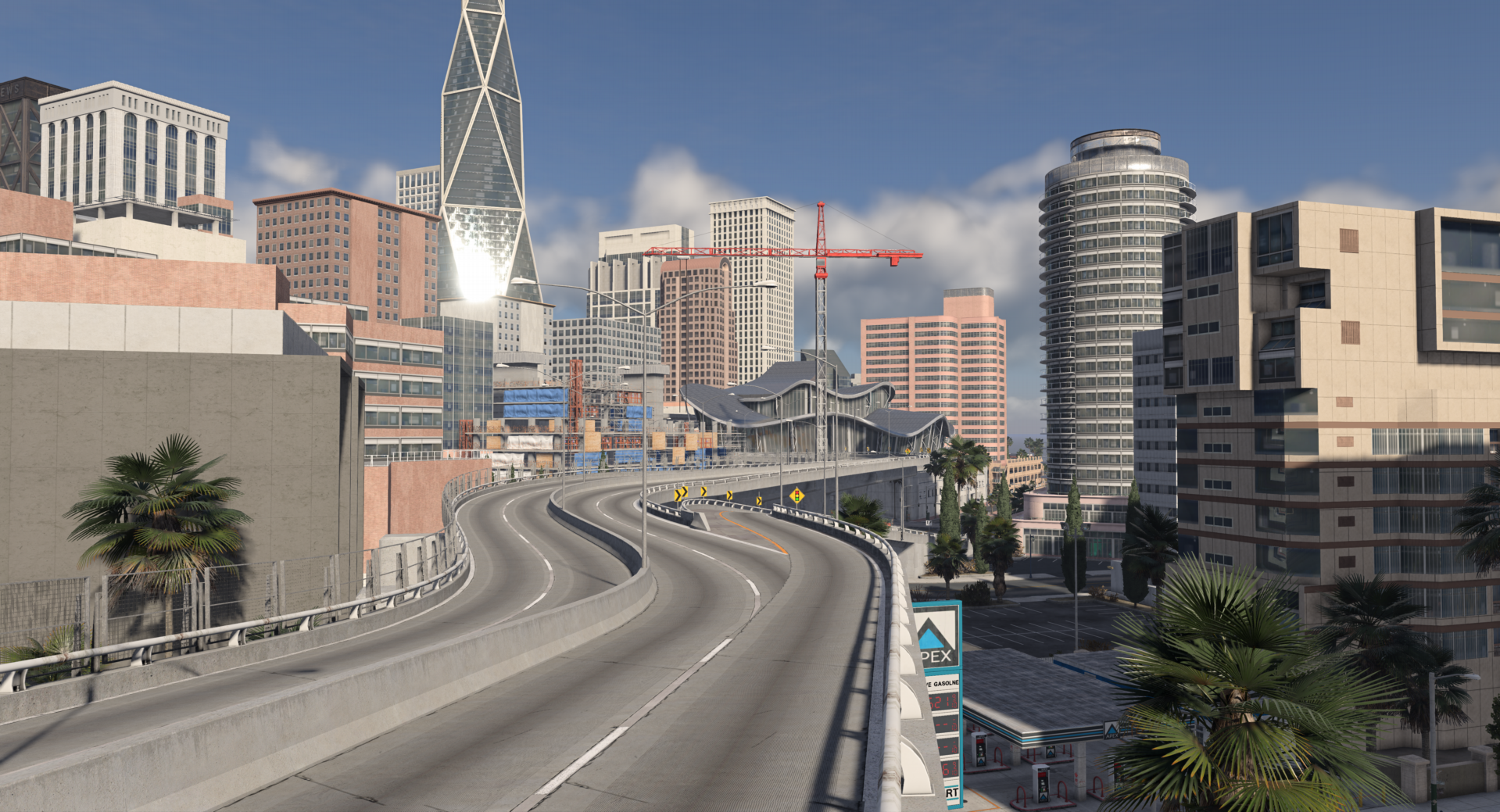
SDR
HDR
Relationship with exposure
Tone mapping works together with Auto Exposure and local exposure:
- Exposure controls how much of the scene brightness is visible
- Local exposure adapts the image using scene luminance so both bright and dark areas remain readable
- Tone mapping controls how that brightness is displayed
All three work together: exposure brings values into a usable range, local exposure adapts to scene luminance, and tone mapping ensures the result appears correct on screen.
EV compression for emissives
Very bright emissive surfaces can become extreme under high night exposure. To keep detail visible without changing daytime behavior, the current lighting pipeline applies EV-based emissive exposure compression.
Emissives remain fully physical at and above the configured start EV. Below that EV, exposure is rolled off by a configurable number of stops per stop below the threshold, with separate strengths for SDR and HDR output. This mainly affects night scenes, where auto exposure would otherwise push emissive materials beyond the display range.
The same idea is also used for the lit moon disc, which behaves like a bright emissive surface. This is not a replacement for tone mapping, it is an exposure-side control that runs before final tone mapping and output encoding.
Impact on content creation
For artists and modders:
- Always author lighting using physical values
- Do not clamp or artificially limit bright values (e.g. lights, emissives)
- Expect HDR displays to show stronger highlights and contrast and colors in highlights
- Colors will remain more stable under high intensity due to perceptual processing
- Emissive materials will appear naturally bright without relying on bloom
- EV compression keeps very bright night emissives readable without requiring separate SDR and HDR authoring
You are always working in HDR internally, regardless of the display. The tone mapper ensures your content scales correctly.
Best practices
- Use real world values for lighting and emissives
- Avoid compensating for SDR limitations, the tone mapper handles this
- Test content in different lighting conditions and times of day
- Use exposure for brightness control, not light intensity hacks
- Allow highlights to exist naturally
The combination of HDR rendering, auto exposure, and GT7 tone mapping ensures that physically based lighting remains consistent, believable, and visually rich across all display types.
See also
- Driving Toward Reality: Physically Based Tone Mapping and Perceptual Fidelity in Gran Turismo 7 - the technical presentation describing the tone-mapping approach used by the current BeamNG lighting pipeline.
Was this article helpful?